
Resources
All-Thread Rod Grades: What A307, F1554, and B7 Actually Mean
What A307, F1554, and A193 B7 actually mean for threaded rod, and why “A36” isn’t a rod grade you can order.
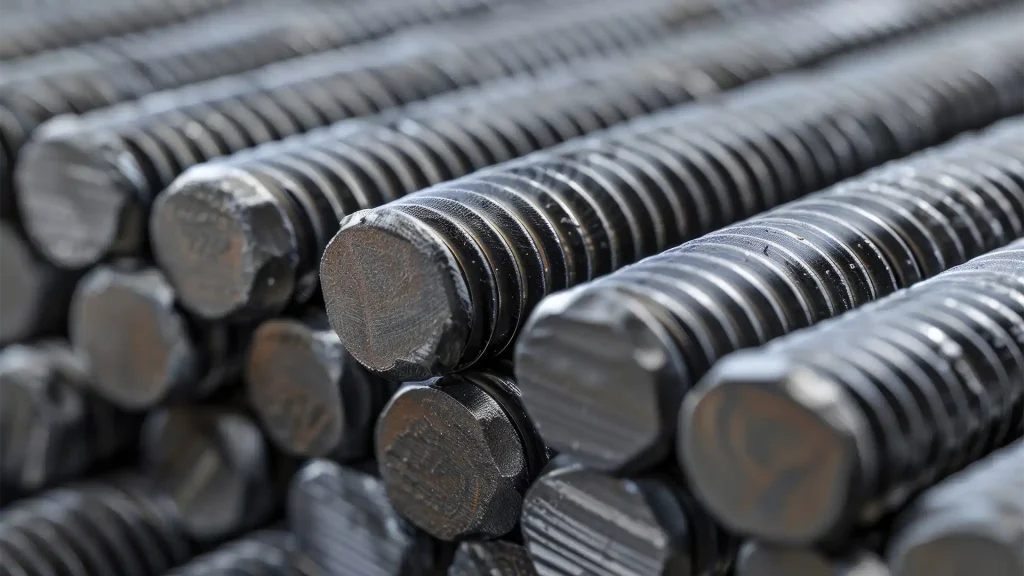
All Thread Rod
“What grade rod do I need?” comes up on almost every job that uses all-thread, and the honest answer is: it depends on the load and what your engineer or spec calls for. But before that, there’s a more basic mix-up worth clearing up.
A36 is a steel grade, not a rod spec
You’ll sometimes hear all-thread rod called “A36 rod.” A36 is a real ASTM specification, but it covers structural steel plate and shapes (I-beams, angle, flat bar), not threaded fasteners. There’s no product called “ASTM A36 threaded rod” you can actually order to spec. If a job calls for “A36 rod,” what’s almost always meant is a general-purpose, mild-steel threaded rod, ordered correctly by its actual fastener specification:
- ASTM A307, Grade A, the standard, general-purpose threaded rod grade, and almost certainly what’s meant when someone says “A36 rod.”
- ASTM A307, Grade B, similar strength, lower carbon content, more common in piping/flange applications.
- ASTM F1554, Grade 36, a rod spec built specifically for anchor-bolt and structural anchoring use, with a guaranteed minimum yield strength (36 ksi) that A307 doesn’t specify. Worth asking for by name when the application is structural anchoring rather than general hanging/support.
Higher-strength grades
- ASTM F1554, Grade 55 and Grade 105, higher-strength anchor rod grades, used where loads exceed what Grade 36 or A307 can carry.
- ASTM A193, Grade B7, a chrome-moly alloy rod grade used in high-temperature and high-pressure applications (pressure vessels, flanges, some structural connections). Notably stronger than A307 or F1554 Grade 36.
- ASTM A193, Grade B8 / B8M, stainless steel rod grades (B8 = 304 stainless, B8M = 316 stainless), chosen for corrosion resistance rather than extra strength.
Reference drawing
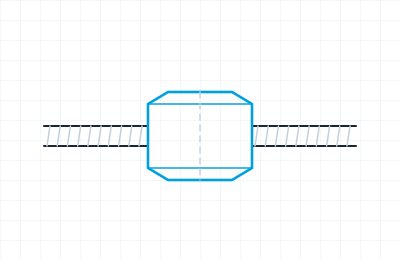
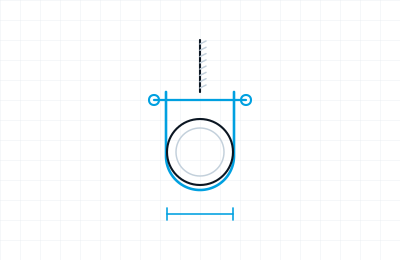
Rod couplings extend all-thread runs on long vertical drops, sized to match the rod grade and diameter you order.
Why this matters
Substituting a lower grade than specified is a real safety issue on load-bearing hanger and support work, not a paperwork technicality, a mismatched grade can mean a rod that yields under a load it was assumed to carry. If your project spec calls out a grade, order to that grade specifically, don’t assume “all-thread is all-thread.”
Quick reference
| Grade | Typical use | Relative strength |
|---|---|---|
| A307 Grade A/B | General-purpose hanging, support, light anchoring | Standard |
| F1554 Grade 36 | Structural anchor bolts | Standard, guaranteed yield |
| F1554 Grade 55 / 105 | Higher-load anchoring | Higher |
| A193 B7 | High-temp/pressure, structural connections | High |
| A193 B8 / B8M | Corrosion resistance (304 / 316 stainless) | Standard, corrosion-rated |
Contractor FAQ
What grade should I order if my spec just says “all-thread rod” with no grade called out?
Ask before ordering if you can, but A307 Grade A is the standard default for general MEP hanging and support work.
Is stainless rod stronger than galvanized steel rod?
Not necessarily. B8/B8M stainless grades are chosen for corrosion resistance, not extra strength. Compare the actual grade, not just the finish.
What’s the minimum order?
All-thread rod ships wholesale, by the box, minimum order is 50 pieces. Request specs & pricing and we’ll confirm exact box counts for your size and grade.
Keep Reading
See what you’re overpaying.
Send us your usual materials list and we’ll show you the direct-source price. No obligation.